

Surfing isn’t just about catching waves. It’s about understanding them. The surfers who progress fastest aren’t just stronger paddlers or more fearless riders. They’re the ones who know which board to ride and how to read the ocean before they even paddle out.
As Kelly Slater once said, “Surfing is about flow and rhythm. It’s not about forcing it—it’s about feeling it.”
This guide breaks down how to build that feeling, from choosing your board to reading waves like someone who grew up in the lineup.
Part 1: How to Choose the Right Surfboard (According to the Pros)
Choosing the right surfboard isn’t just technical—it’s personal. The best surfers in the world obsess over this for a reason: your board dictates how you interact with the wave. How early you get in, how you generate speed, and how you move once you’re up.
Longboards (9’+): Style, Flow, and Foundation

Longboards are where many surfers begin, but they’re far from just beginner boards. They teach you patience, positioning, and how to actually read a wave instead of reacting to it.
That’s why Donald Takayama’s perspective feels so foundational. He once said, “Longboarding is a dance. It’s not about ripping the wave apart—it’s about moving with it.”
On a longboard, you feel that immediately. You’re not chasing sections; you’re gliding through them.
Why they work:
- Maximum stability and paddle power
- Early wave entry = more waves, faster progression
- Built for style: cross-stepping, trimming, nose riding
Best for: Beginners, small waves, clean point breaks
Funboards / Mid-Lengths: The Board That Makes Surfing Click
![Mid Length Surfboards - UK's #1 Range [All New For 2025]](https://assets.boardshop.co.uk/media/wysiwyg/top-5-mid-lengths-banner2.jpg)
Mid-lengths are often the board where things finally start to make sense. You’re still getting the glide, but now you can start to feel control.
Skip Frye has always centered his designs around flow. As he put it, “Speed and trim—that’s where the feeling is.” That’s exactly what mid-lengths unlock. You stop thinking about standing up. You start thinking about where you’re going.
Why they work:
- Balance of glide + maneuverability
- Easier transitions from beginner to intermediate
- Adaptable across conditions
Best for: Everyday surf, travel, building confidence
Fish / Grovelers: Small Wave Mastery
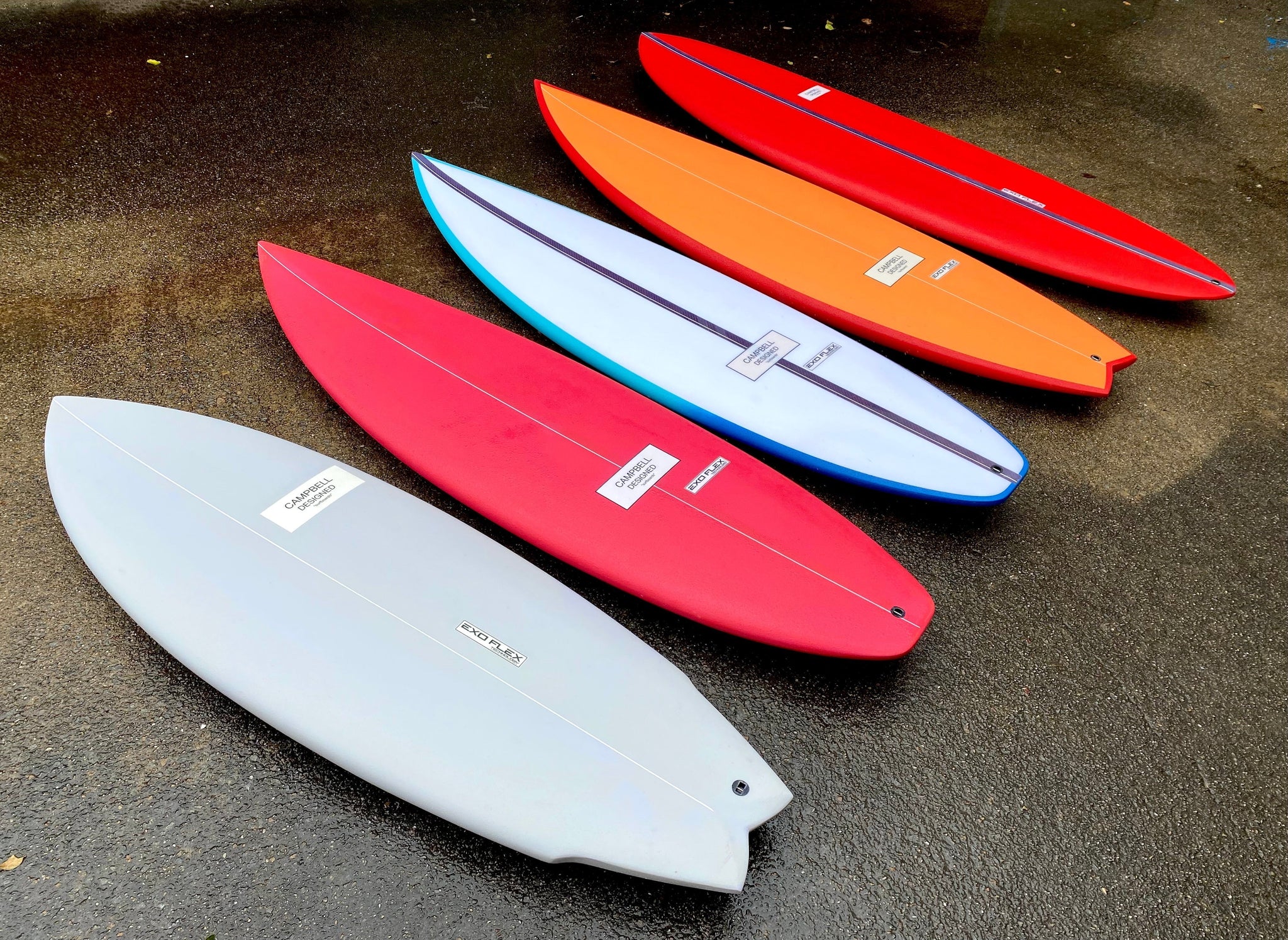
Rob Machado, known for his alternative board approach, encourages you to rethink what “good waves” even mean. He says, “The right board can make bad waves fun—and that’s everything.”
A fish or groveler shifts your mindset. Instead of fighting weak surf, you start generating speed and finding lines where there didn’t seem to be any.
Why they work:
- Wider outlines = more speed in slow surf
- Catch waves easier than shortboards
- Keep sessions fun when conditions are average
Best for: Small, mushy, or inconsistent waves
Shortboards: Performance, Power, Precision
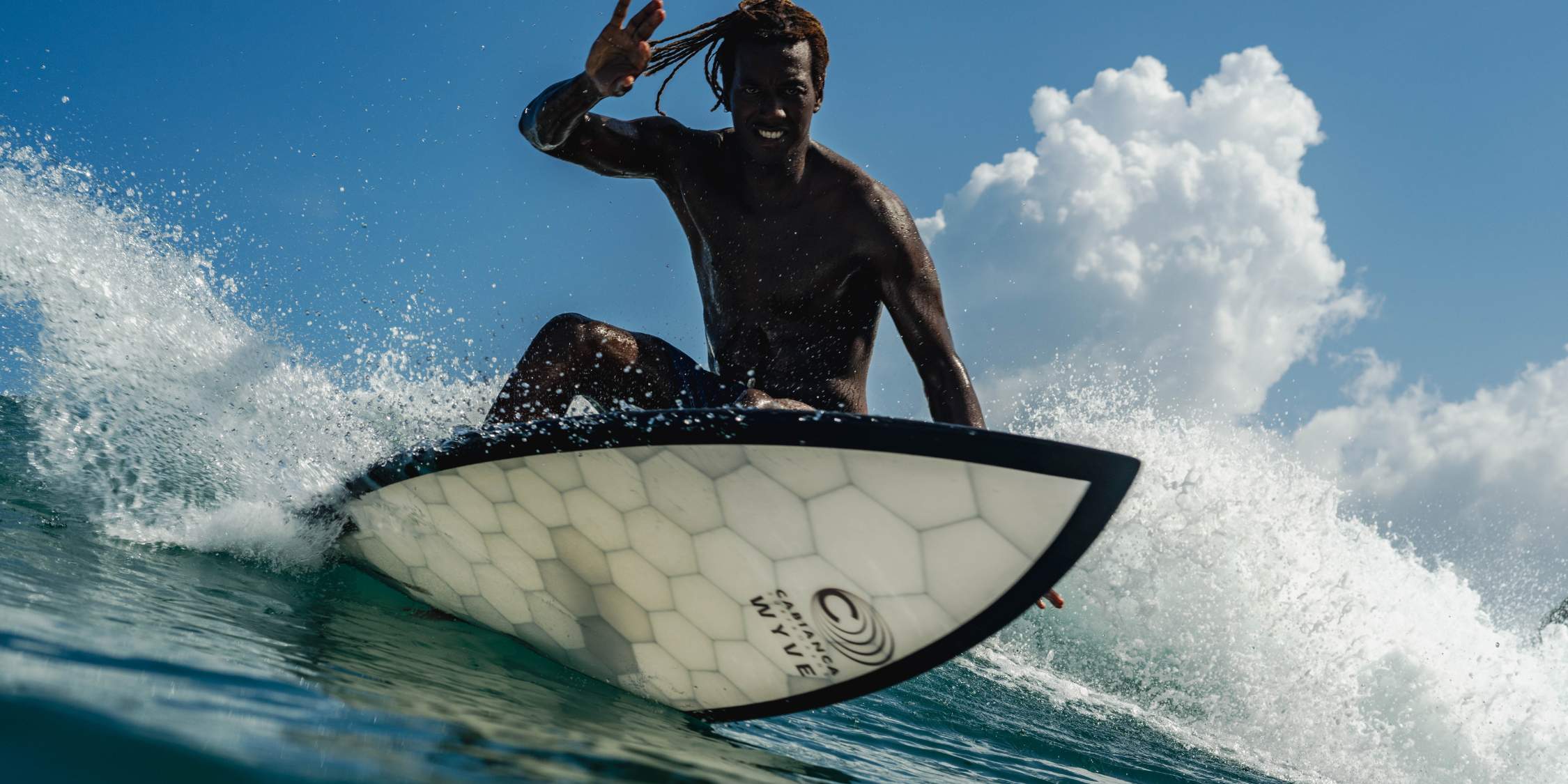
As Mick Fanning explains, “A good shortboard lets you surf the wave the way you want—not the way the board allows.” That freedom only comes once your positioning and timing are dialed. Until then, the board will feel demanding. After that, it feels invisible.
Shortboards are where everything tightens up. Less room for error, but more reward when you get it right.
Why they work:
- Highly responsive and maneuverable
- Designed for speed, turns, and critical sections
Best for: Experienced surfers, steeper or more powerful waves
Step-Ups & Guns: When the Ocean Gets Serious
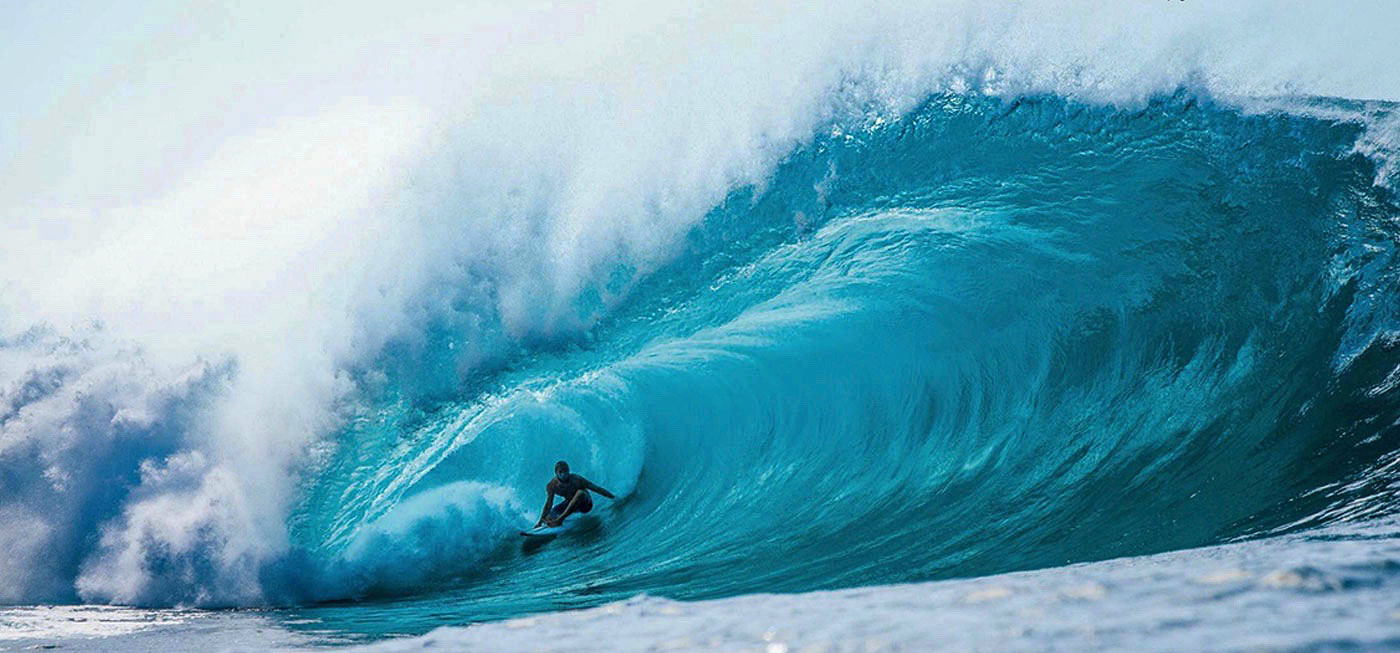
Why they work:
- Extra length = paddle speed and stability
- Narrow shapes = control in steep drops
Best for: Overhead surf and powerful conditions
However, the best surfers don’t rely on one board—they adapt and match their board to the conditions. The more dialed your board choice, the less you have to fight the ocean.
We suggest the following to build your surf quiver:
- < 3 ft: Longboard, fish, or groveler
- 3–6 ft: Mid-length or shortboard
- 6 ft+: Step-up or gun
Part 2: How to Read Waves Like a Local
Even with the perfect board, you won’t catch waves consistently unless you understand how the ocean moves. Wave reading is the difference between chasing waves—and being exactly where they break.
Every pro says a version of the same thing: Spend more time watching. Watch how sets come in. Watch where waves break. Watch who’s catching the most waves—and why.
Because once you understand that, everything else becomes easier.
Spot the Peak

The peak is where the wave begins to break, but it’s rarely fixed. It shifts with the tide, the sandbar, and the angle of the swell. Look for:
- Where waves first crest across multiple sets
- Whether peaks hold or shift
- Which sections stay open versus shut dow
Stephanie Gilmore explains it best: “The more time you spend watching the ocean, the more it starts to reveal itself.” And that’s exactly what happens. At first, it feels unpredictable. Then you start to see consistency.
Understand Wave Types
Recognizing wave types is less about memorization and more about reading energy.

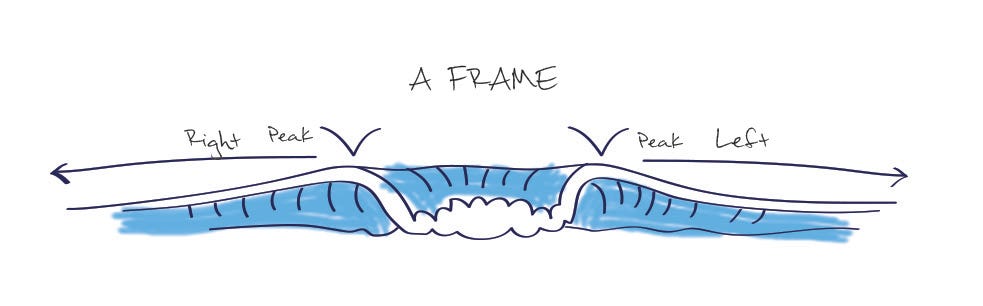
A clean right will peel. A left will do the same in the opposite direction. An A-frame gives you a decision to make in seconds. A closeout tells you not to bother.
“You’re not just riding waves—you’re making decisions in real time," explains Shane Dorian.
The better you read the wave, the better those decisions become.
- Rights & Lefts: Direction the wave breaks
- A-Frames: Split peaks—choose your line
- Closeouts: Break all at once (avoid)
Find the Shoulder
The shoulder is where the wave opens up. It’s where speed builds and where your line actually forms.

Joel Parkinson explains that shift, from reacting to anticipating, is what changes your surfing. “The best surfers don’t go where the wave breaks—they go where it’s going.”

When you’re in the right spot, everything feels smoother. The drop is controlled. The wave runs in front of you instead of collapsing beneath you.
Master Paddle Timing

“The earlier you’re in, the more control you have,” says John John Florence.
Timing is one of the hardest things to learn because it’s mostly feel. As you lie on your board, the ocean gives you signals. The water lifts beneath you. Your board starts to glide before you’ve even fully committed.
That’s the difference between catching the wave and being caught by it.
Read the Lineup
The lineup is constantly giving you information. You just have to read it. Watch where experienced surfers sit. Notice who is consistently catching waves and who is constantly paddling without success.

Tom Curren has always embodied this idea: “Style comes from understanding the wave, not just reacting to it.” Understanding starts before you even enter the water.
Final Take
Surfing is equal parts equipment and intuition:
1. The right board helps.
2. Wave knowledge changes everything.
But the real unlock is time—time watching, time learning, time in the water. Because eventually, the ocean stops feeling random. And starts feeling like something you understand.


0 comments